
A standard homeowners policy generally limits jewelry theft to about $1,500, and that number lands hard once a ring has gone missing. A jewelry appraisal for insurance closes the gap by putting a documented replacement value on your piece, so you can insure it for what it would actually cost to replace. Insurance appraisals are the most common kind we do at Johantgen Jewelers, a Minneapolis-area family business since 1896. Here’s why the paperwork matters, how the process works, what a good report includes, and when yours is due for an update.
Key Takeaways
- A jewelry appraisal for insurance documents retail replacement value, which usually runs well above what the piece would sell for.
- Standard homeowners policies generally limit jewelry theft to about $1,500, so valuable pieces often need their own coverage.
- A useful appraisal records measurements, stone grades, metal content, and condition, not just a dollar figure.
- Plan on an update every two to five years depending on your insurer, and sooner if prices jump or the piece changes.
- Appraisal fees should reflect the work involved and never a percentage of the appraised value.
What Is a Jewelry Appraisal for Insurance?
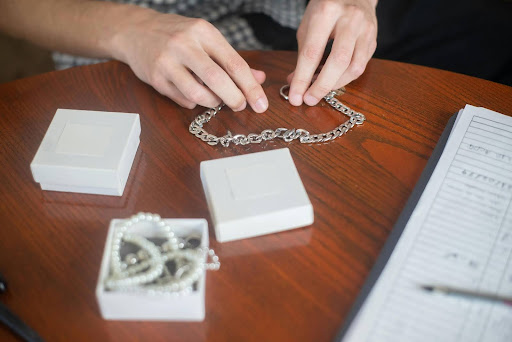
A jewelry appraisal for insurance is a written report that describes your piece in detail and states what it would cost to replace it with one of equivalent quality at current retail prices. Insurers use that figure to set your coverage, and you’ll have documentation to lean on if you ever file a claim.
An insurance appraisal for jewelry isn’t a resale price. If yours came in far above a gold buyer’s offer, nothing went wrong. The two numbers answer different questions:
| Type of value | The question it answers | When you need it |
|---|---|---|
| Retail replacement | What would an equivalent new piece cost today? | Insurance coverage and claims |
| Fair market value | What would a willing buyer pay in its current condition? | Estates and charitable donations |
| Scrap or melt value | What is the metal worth by weight today? | Selling gold |
Tell your appraiser what the report is for. The purpose decides the number.
Why You Need a Jewelry Appraisal for Insurance
You need a jewelry appraisal for insurance because a standard policy rarely protects a valuable piece on its own. Theft limits are low, accidental loss usually falls outside the policy, and without good documentation you’re left trying to prove what a piece was worth after it’s already gone.
A rider, usually called a floater, fixes most of that. The Insurance Information Institute notes that floaters reach losses a standard policy won’t, like a ring dropped down a drain or a watch left in a hotel room, and that items must be professionally appraised first. A current appraisal helps you:
- Insure the piece for what it would really cost to replace
- Avoid paying premiums on a number that’s too high, or coming up short with one that’s too low
Ask your agent how a claim gets settled, too. Acuity’s scheduled jewelry coverage, for example, offers either actual cash value or agreed value. One pays no more than the item’s value at the time of loss. The other pays the amount you agreed on upfront for a total loss.

How Does a Jewelry Appraisal for Insurance Work?
A jewelry appraisal for insurance works in five stages: you explain what the report is for, the appraiser examines the piece, researches current values, documents the findings, and walks you through the result. At Johantgen, the exam for a single piece typically takes 30 to 60 minutes.
- Share the purpose, and bring any past appraisals, receipts, or certificates.
- We examine it, assessing stones for cut, color, clarity, and carat weight, testing metal purity, and checking condition.
- We research current market values for materials and comparable pieces.
- We write the report, covering descriptions, measurements, weights, stone grades, metal content, condition, and value. Photography is available for an additional charge.
- We review it together, because you shouldn’t have to decode your own paperwork.
Our jewelry appraisal services also cover pieces we didn’t sell you, including online purchases and inherited jewelry. If something needs additional testing, we’ll tell you. If a piece is rare enough to call for a specialist, we’ll say that too.
What Should a Jewelry Insurance Appraisal Include?
A jewelry insurance appraisal should describe your piece so precisely that someone who has never seen it could find or make a comparable one. A single dollar figure on store letterhead won’t do that, and it leaves your insurer guessing about exactly what it’s being asked to replace.
Check your copy for:
- The date, the stated purpose, and the appraiser’s name and contact information
- Metal type, purity, and weight
- Measurements of the piece and major stones
- Stone grades, and whether a diamond is natural or lab-grown
- Construction details and condition notes
- The replacement value, with any sales tax listed separately
Our guide to the diamond 4Cs will help you read those grades with more confidence. A GIA or other lab report is a great companion, but it grades the stone and leaves out the dollar value.
Who writes the report matters as well. Jewelers of America points out that no federal or state rules set education or certification requirements for appraisers, so ask about gemological training, appraisal experience, and how the value was reached. Nobody good will mind.

How Often Should Jewelry Be Appraised for Insurance?
Most jewelry should be reappraised for insurance every two to five years, depending on your insurer. Jewelers Mutual recommends a new appraisal every two years, and we generally suggest every three to five. Whichever schedule you follow, a sharp move in metal or gemstone prices is reason to come in sooner.
Gold makes the case better than we can. It started 2025 at about $2,624 an ounce and hit a record $5,589.38 in January 2026. Coverage written on an older number may not match what it costs to make the same piece today. Schedule an update when:
- You’ve repaired, reset, or redesigned the piece
- You’ve inherited something with old paperwork, or none
- You’ve changed insurers, or yours asks for a new report
An update doubles as a checkup, since condition goes on the report. One customer who came to us this year for an insurance appraisal and a soldering job also left with her settings tightened. Worn prongs are easy to miss until a stone is gone, and prong repair beats a claim every time. We handle the vast majority of repair work ourselves, with trusted outside artisans for certain specialty steps.
Jewelry Appraisal for Insurance: Frequently Asked Questions
Does jewelry need to be appraised for insurance?
Not always to start coverage, but it’s still worth doing. Jewelers Mutual lets most customers begin without one, then asks for an appraisal or other documentation at claim time. Acuity typically requires one for scheduled items over $20,000. Other insurers want one upfront, so ask your agent which rule applies to you.
How much does a jewelry appraisal cost?
Nationally, a jewelry appraisal usually costs about $75 to $100, and fees can range from $50 to $200 depending on the appraiser and the piece. At Johantgen, we charge based on the work involved and give you a clear quote before we begin.
Be wary of any jewelry appraisal cost set as a percentage of value. That pricing rewards a higher number.
How long does a jewelry appraisal take?
For a single piece, the exam at Johantgen typically takes 30 to 60 minutes, and the written documentation is usually ready within a few business days. Bringing several pieces? We’ll set aside the right amount of time and talk through turnaround with you so you know what to expect.
Are jewelry insurance appraisals accurate?
A careful one is accurate for its purpose, which is estimating what an equivalent new piece would cost at retail. It’s an expert opinion of value, not a resale quote or a guaranteed payout, so expect it to sit above what you’d get selling the piece, and ask how your insurer settles claims.
Where can I get a jewelry appraisal for insurance near Minneapolis?
You can bring your piece to Johantgen Jewelers in Crystal, about 15 to 20 minutes from downtown Minneapolis. We’re a fifth-generation family business, and we appraise jewelry no matter where it was purchased. Bring any past appraisals, receipts, or certificates you have, and we’ll document the rest during the appraisal.
Our page on jewelry services in Minneapolis has directions.
Ready to Schedule Your Jewelry Appraisal for Insurance?
If you own a piece you’d replace in a heartbeat and the paperwork is missing or getting old, a jewelry appraisal for insurance is a simple next step. At Johantgen, we’d be glad to take a careful look and explain what we find. Schedule your appraisal or call 763-537-7233 and we’ll help you figure out what you need.